Monday, March 2, 2026

As AI and Robots Make Necessities Almost Free — How Many More “All-In” Years Do You Have? ✅


 Check out Takumi’s NEW English youtube channel🎵

↓↓↓

https://www.youtube.com/@takuway


1. Elon Musk’s words sent a chill through me.

A world is coming where AI and robots drive production costs toward zero.
If you design your life based on old assumptions—savings, profession, academic background, GDP, prices, salaries—you may not withstand the 3–7 year period of upheaval that lies ahead.

2. What “Savings Will Become Meaningless” Really Means

  • It’s not a call to be reckless or to waste money.

  • The argument is that savings lose meaning if the premise that money retains value (scarcity) collapses.

The issue is not an individual’s attitude. It’s a shift in the very foundation of the economy.

3. UBI vs. “Universal High Income”

  • Conventional UBI = cash payments for basic livelihood security.

  • The “universal income” discussed here refers to a world where explosive productivity makes goods and services radically cheap.

The focus is not on redistribution, but on a dramatic transformation of the production structure itself.

4. Core Logic: Near-Zero Production Costs → Weakening of the Price Concept

Cost of goods (materials + labor + energy) approaches zero through AI, robotics, and ultra-low-cost resources →Prices can drop and still remain viable →
Essential goods move toward being “as free as air.”

This is the premise behind the “disappearance of jobs” and the diminishing relevance of savings.

5. Why GDP Becomes Less Meaningful

GDP measures total transaction value, not actual physical output.

Even if AI massively increases production volume, falling prices suppress GDP growth →
“Physical abundance” becomes more important than economic growth rates.

6. The Three-Phase Disruption Model

Phase 1 (1–3 years): AI replaces white-collar roles; distribution systems are unprepared; unemployment rises.

Phase 2 (3–5 years): Collapse of old systems overlaps with incomplete new institutions; social instability intensifies.

Phase 3 (up to 7 years): Nations that endure the crisis establish AI-wealth distribution systems; a new order stabilizes.

It won’t be instant utopia. The transition period is the greatest risk.

7. Why Doctors and Lawyers May Disappear

Professions centered on information processing are more easily replaced.

AI doesn’t fatigue, instantly integrates the latest knowledge, and maintains consistent accuracy—giving it potential structural advantage.

(Regulation and ethics are a separate layer of discussion.)

8. The Transformation of Education

Memorization is ending.

What matters is:

  1. The ability to design what AI should do.

  2. The discernment to evaluate AI’s output.

Degrees will matter less than what you’ve actually created using AI.

9. Even Emotional Labor Isn’t Safe

If empathy, listening, and patience can be simulated, they too may become replaceable.

The assumption that “this is uniquely human territory” begins to erode.

10. The Final Constraint: Energy

AI and robots do not function without electricity.

The greatest bottleneck to zero production cost is energy.

Physical constraints—power generation, heat dissipation—remain the final gatekeepers.

Summary (The Blueprint)

Technological evolution → Near-zero production costs →
Shift in the meaning of price, GDP, profession, and academic credentials.

However, the 3–7 year transition period poses the greatest danger.

The key to survival is not memorization, but leadership in directing AI and the discernment to evaluate it.

The ultimate constraint is energy.

〜〜〜

When there is too much abundance, this is what happens
↓↓↓

Mice living in a paradise-like environment eventually go extinct!?

Like mice living in a paradise-like environment eventually go extinct?!


〜〜〜


So then, what should we do?!


↓↓↓

If we seriously assume the premise
(near-zero production costs → turbulence during the transition), then what to do is actually simple.

In conclusion:

① Invest in your value-creation ability, not just income sources.
② Design your position, not just your profession.
③ Build influence and connections, not just savings.


🔥What to do in the first 90 days (Immediate Action)

  1. Become the one who "uses AI"

    • Create something with AI every single day (writing, proposals, analysis, videos, courses).

    • Turn “what you created with AI” into a portfolio.

  2. Deconstruct your work
    Break your job into:

    • Information processing

    • Judgement/assessment 

    • Human elements
      Then redesign it with the assumption that information processing is handed over to AI.

  3. Lighten fixed costs

    The transition period will be unstable.

    "Flexibility" will be your greatest asset.


🧠 What to Do Over 3 Years (Build Structure)

  1. Redefine your AI command ability

    • Designing better questions

    • Editing outputs

    • Integrating multiple AIs

  2. Build a Community
    This may be the most important of all.
    During transitional chaos, what protects you is not “affiliation,” but “connection.”


  3. Shift your income structure from "labor" to "design"

    Move away from selling hours.
    Move toward systems, brand, and intellectual assets.


🚀 What to do over 7 years (Positioning)

  1. 1. Claim a position that fuses AI × humanity.

    • Philosophy

    • Vision

    • Future design

    • Story creation

    These are areas that AI cannot yet fully replace.

    2. Adopt an energy perspective.
    The coming bottleneck is electricity.

    • Renewable energy

    • Data centers

    • Distributed infrastructure

    Those who understand this layer will have an advantage.

    3. Have the courage to let go of titles.
    Not “doctor,” “lecturer,” or “coach,”
    but positions of higher abstraction, such as
    “Future Architect” or “Human Augmentation Navigator.”


🌱 and the most important thing of all

Do not move from fear.

Don’t run on a black engine (anxiety).
Run on a white engine (creation and contribution).

The turbulence may come.
But turbulence is also a period of redistribution.

Your theme has always been consistent:

  • Rewrite the fundamental premise.

  • Live from future memory.

  • Leap beyond the goal.

This current wave may, in fact, be a tailwind.


Kumamoto with Philosophy

Kumamoto's broth!

↓↓↓

Seijyaku no Mori no Yado Yama Shinobu


https://maps.app.goo.gl/8ZAnHNeeEYZZuaFe7?g_st=ic


Soba Restaurant Sōtarōan


https://maps.app.goo.gl/6zziw9eg9Mc66NEK9?g_st=ic


Dining Spot Zensho


https://maps.app.goo.gl/h7MDkYdtN9w1qtqeA?g_st=ic


Araifarm Aso


https://araifarmaso.com/


How many more years do you have left
that you can truly give your all to?

↓↓↓

In our 50s, it’s easy to feel like “there’s still time.”
Yet in reality, this may be the stage of life when we most easily overlook time.

When people reach their 60s, many look back and say,
“I never imagined it would go by this fast.”

Most people think about pensions and savings,
but few ask themselves,
“How many more fully committed years do I actually have left?”
That is the quiet pitfall.

When we were young, time felt like something that simply flowed.

But in our 50s, changes in physical strength, caring for aging parents, children becoming independent—
all of these overlap, and we begin to realistically wonder,
“How many more years can I truly move at full intensity?”

The real issue isn’t that there isn’t enough time.
It’s that more and more time passes without being consciously chosen.

  • Relationships maintained out of inertia.

  • Work continued out of inertia.

  • Obligations that keep increasing.


 When we were young, adding more expanded our world.

Now, the more we add, the thinner we become, the more tired we grow,
and our own time gets shaved away.

And before we notice, five years, ten years have passed.

Perhaps your 50s are not the age to expand your possibilities,

but the age to narrow them. 

  • Decide what not to do.

  • Decide whom to protect.

  • Decide which time you will no longer give away.

Time itself does not increase—
but it becomes denser.

When we recognize that it is finite,
life does not shrink—it gains definition.

Your 50s are not too late.
They are the age when you can choose again.

You don’t have to add anything.
It may be enough to subtract one thing.
It may be enough to decide to protect just one thing.

Use a small part of today for yourself.
That alone changes the quality of time.

There is only one question:

“How many more years can you give your all?
And with whom—and for what—will you spend that year?”


Today we looked at real estate in Hakuba!


Alps〜〜〜〜


This cafe is so cute!


The sauna is in the lower right.

Overlooking the lake.


And then,

rejuvenate in the lake fed by melting snow.


And then to Matsumoto→Nagano→Tokyo


The soba I ate along the way was delicious too!


Link to Takumi Yamazaki’s 

ENGLISH Book “SHIFT”

https://amzn.to/2DYcFkG

Sunday, March 1, 2026

From Kyoto to Nagano — A Spring Beginning at Kiyomizu-dera

 Check out Takumi’s NEW English youtube channel🎵

↓↓↓

https://www.youtube.com/@takuway


A guardian deity?!

A legend from around Kyoto’s Gojo area—
“Shoki-san”… Shoki, the one who defeats demons.

In literature from the Bunka–Bunsei era, the following episode is recorded:

A pharmacist in Sanjo had a large onigawara (demon-faced roof tile) installed on his roof. When the wife of the house across the street saw it, she became so distressed that she took to her bed. She asked for it to be removed, but her request was refused. As a countermeasure, she had a tile-maker create a figure of Shoki—the demon slayer—and placed it on her own roof. After that, her illness was completely cured. This story is said to have spread among the common people.

There is another explanation as well. Kyoto has many temples. Because temples repel evil spirits with their spiritual power and protective demon tiles, the deflected demons would end up entering ordinary homes instead. So people began placing fierce-looking Shoki figures on their rooftops to protect themselves from these spirits. It’s said that this practice became popular throughout the city of Kyoto.

Excerpted from

【Exploring Kyoto's Mysterious Tales】Though Small, Possessing Great Spiritual Power--Kyoto's Shoki-san


The shop on Shimizu-zaka,

Opening in mid-March?


This is its current state・・・


How was the seminar?


At New York Takusando,

we bake white bread!


1) New York Publisher (Kaneko-san's talk) 

  • Sanctuary Publishing began as what could be described as “an amateur group like a college club,” and has grown into a publishing company that has continued for nearly 30 years.

  • Kaneko-san has known Takumi Yamazaki since their junior year of university. After hearing one of his lectures, he decided, “Let’s turn this live energy into a book,” and that became the starting point for their publishing work.

  • In the early days, the work was very hands-on and gritty—visiting bookstores one by one to pitch, traveling around Kansai to promote titles, even staying overnight in capsule hotels while building relationships step by step.

  • After about ten years, even when you succeed, the excitement can fade due to familiarity. They began to feel that something intentional was needed to preserve a sense of freshness.

  • At a bookstore in Hawaii, he realized that they had no dedicated shelf space overseas. That sparked the idea: If we create an overseas publishing company, we can start again from zero. And so they expanded abroad.

  • Overseas publishing is entirely different from Japan in terms of distribution, contracts, and sales systems—and full of unexpected trouble (for example, a distributor going bankrupt right before a book’s release).

  • To ensure the company would not waver, they established a Credo (core philosophy).


    • Credo: “A publishing company for people who don’t read books.”

      (Meaning: delivering the experience of “I read it” / “That was interesting” to people who normally don’t read.)

  • They also created three operational rules:

    • 1 Publish only 12 books per year (small but elite—no misses)

    • 2. Keep the team under 20 employees at all times (to preserve relationships, passion, and quality)

    • 3. Adopt a unit system (editors, sales, PR, and designers work together from the planning stage as one team)


  • The aim of the unit system is to eliminate division or conflict between production and sales, and instead create books—together, from the same perspective—that truly reach people who don’t usually read. 


2) The Restaurant (Kiyo-san's story)


  • Kiyo-san has lived in New York for 22 years. He turns 50 next year and is planning a trip to Alaska with his family.

  • His core profession is restaurant creation, and he defines his title as “Creative Director.”


    • His concern is that in the restaurant industry, there is often no one overseeing the entire brand—beyond just the food. The role should encompass space design, atmosphere, menu development, service, graphics—everything that shapes the brand as a whole.


  • Career path:Osaka-based company (Chanto) → became head chef of a large restaurant at a young age → moved to the U.S. in 2004 to open an overseas location.

  • He met Takumi Yamazaki in New York about 18 years ago, and they have continued collaborating on projects since.

  • “Takumen” opened 10 years ago in Long Island City.


    • In New York’s restaurant industry, leases typically run in 10-year terms, with rent increasing annually. Renewal time brings a major hurdle.

    • Despite this, they successfully renewed last year and are now aiming for a 20-year run.


  • Current structure: four partners plus trusted collaborators. They operate in Brooklyn and Kyoto, with further expansion underway.

  • They have signed a second Manhattan location (around NoMad, near 28th Street and Park Avenue), and expect to grow from four to five stores within the year.

  • They also referenced the growth of large-format ramen brands expanding overseas, such as Tonchin. 

The Essence (in one sentence)

  • “To avoid deteriorating through familiarity, continue creating freshness through philosophy and systems.”


    • Publishing: Credo + limited annual titles + small elite team + unit system

    • Dining: Designing the entire brand—not just the cuisine—and overcoming long-term lease barriers to expand 


Thank you for hosting this!


Dinner with the Takusando Gokomachi crew!


↓↓↓


It was fun talking with you!


Kyoto oden, the best!

Ebisu River Enraku - Izakaya near Kyoto City Hall Station

Kyoto Prefecture, Kyoto City, Nakagyo Ward Ebisu River Street, Fuyacho, West Entrance, North Side


This was lunch〜〜〜


and then・・・


We moved to Hakuba!


Can we open a Takusando in Hakuba


The soba is excellent!


YAMASHINA SOBA 


This soba is insane!

Seriously, it's delicious!


I love on Snow Peak〜〜〜


I love Seto-san's music!

I subscribed to the channel~~


Thank you!


↓↓↓


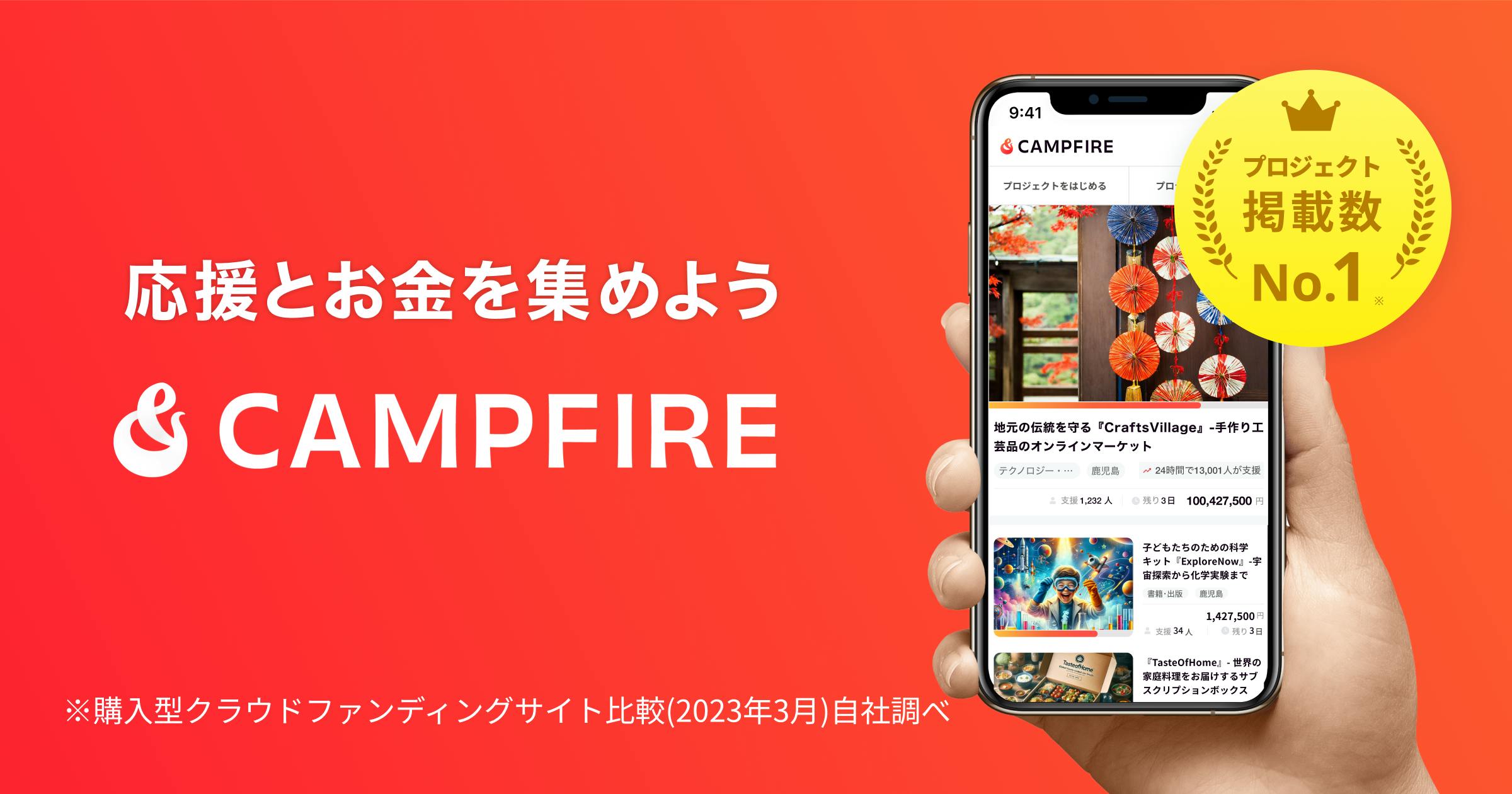
Campfire page!


Thank you Katsunari Tanaka


↓↓↓

1) Introduction: Overseas Experiences = “Searching for a Place That Fits You”

1. He traveled around Southeast Asia (Da Nang → moved due to rain → Nha Trang, Vietnam, etc.).

2. There were incidents from day one—like theft—but instead of discouraging him, it excited him so much that he decided, “I’m going to live here.”

3. He also went to Paris, but because of a wheat allergy, daily life didn’t suit him. That led him back to Southeast Asia, where rice-flour culture is prevalent.

4. Conclusion: Searching for a city that truly fits you may be one of the best ways to live.


2) Preface to Today’s Main Theme: Reviving The Biorhythm of Success

1. In 2016, Tanaka published The Biorhythm of Success.

2. Later, Yamazaki spoke about its contents in his lectures in a way that made them easier to understand.  Many people responded:

“I didn’t understand Tanaka-san’s talk, but when Yamazaki explained it, I finally got it.”

3.  The book had gone out of print, but after ten years, the first book—filled with heartfelt intention—will be self- republished this March.

4. There will also be a commemorative lecture (March 5).

However, the talk shifts here to the real theme: “My Father’s Story.”


 3) Self-Introduction: The Turning Point at 13 That Shaped His Life

3-1. Roots and Rebellion

He grew up in a small village in Nagasaki. His father was well-known as a baseball coach.

He disliked baseball precisely because it was his father’s world. Instead, he filled his schedule with basketball and Shorinji Kempo to avoid it.

In his first year of junior high, he admired delinquent culture, acted rebellious, and even glared at teachers.


3-2. The Source of His Inferiority Complex: His Sister

1. His older sister was a star in junior high basketball, and he was constantly compared to her.

2. Believing, “I can’t win anyway,” he avoided getting hurt by not taking things seriously and joking around instead.

3.   His former coach repeatedly said things like, “You’re not even worth the dirt under your sister’s nails,” deepening his resistance and escapism. 


3-3. The Fateful Words: A New Coach’s Rule

1. A new coach, Mr. Fuchigami, declared:

  • I don’t care who’s skilled or unskilled

  • Only those who give their all will be starters

  • I don’t look at the past—only from today forward

2. Tanaka’s perception flipped.

“If my lack of skill won’t be exposed, then I can win just by giving it everything.”

3. He began running at full speed, shouting encouragement, embracing gritty effort—true commitment.


3-4. The Result: Effort Was Recognized, and His Life Opened Up

1. Talented but half-hearted players were benched; Tanaka became a starter.

2. Though his middle school results weren’t spectacular, his all-out attitude caught scouts’ attention.

3. Combined with the recognition of his sister’s name, he entered a powerhouse high school.

4. In that intense environment, he grew—starter → captain → national-level performance.

5. Here he gained conviction:

“From today, you can change” is real.
And that would become the message he carries for life.


4) Generalization: Successful People Often Have a “Core Message Experience” Around Age 13

1. After interviewing many successful individuals, he found that many had a formative core message experience around age 13.

2. As long as they embed that message into their profession, activities, and communication, their hearts don’t easily break.

3. Without that core, challenges tend to collapse at the first setback.

4. He asks the audience: What was your message at 13?


5) Anecdote: The Origin of His Writing Skill — The “Mission-Driven Reflection Essay”

1. In a university entrance essay, despite knowing nothing about Japanese literature, he passed by writing a reflection-style essay combined with a grand vision.

2. He even leveraged the interviewer’s frustration to win acceptance on the spot.

3. From then on, he refined the skill of writing with such a strong sense of mission that it became difficult for the reader to say no.

  • High approval rate for publishing proposals

  • Applied to his career as an author

This became further proof that no life experience is wasted.


6) Rising from Despair: Meeting Takumi Yamazaki

1. At work, he produced no results. Door-to-door sales broke his spirit; people didn’t even want him there.

2. Then he encountered the book The Project of Life at a bookstore. The idea of viewing life as a project shocked him.

3. When he learned the author was Takumi Yamazaki, he researched him and felt overwhelmed—even despairing at the perceived gap in talent.

Still, he refused to give up. He imitated, crafted words, read self-development books.

Eventually, he arrived at the concept:b“My profession is myself.”

5. Years later, he now stands on the same stage as the person he once admired.

Conclusion: A single encounter can suddenly elevate a person’s potential. 


7) The Core of His Father’s Teaching: The Philosophy Embedded in His Name

7-1. Dissecting His Father’s Regret

1. His father had multiple opportunities to go pro but ultimately missed them.

2 Later, he interviewed top athletes to understand why.

7-2. The Difference Between First-Rate and Second-Rate: Defeating “Just for Today, It’s Fine”

1. The common trait among elite athletes:

2. Not sheer volume of practice, but never skipping a day.

Even on difficult days, they protect a minimum standard (for example, 50 practice swings—every single day).

3. Second-rate players accumulate “It’s fine just for today.”

As a result, when opportunity comes, they lack the unshakable confidence to say yes without hesitation.


7-3. That’s Why He Was Named “Katsunari”

1. “To overcome oneself and accomplish things.”

2. His father condensed his regret and his hope for his son into his name.


8) His Father’s Catchphrase: If You’re Scared, Go

1. Boiled down to its essence, his father’s teaching was: If you’re scared, go anyway.

2. If you run from opportunity out of fear, regret remains.

3. Thus, “If you’re scared, GO” became Tanaka’s life principle.


9) Final Message: From Today, You Can Change

1. Tanaka’s turning point came from the words, “I only look at today forward.”

2. His father’s lesson was about defeating “Just for today, it’s fine.”

3. His meeting with Yamazaki proved that life can suddenly change one day.

4. Conclusion:

Encounter × Action from today forward
That’s how a person suddenly leaps upward.

So don’t give up.

Start today!


Link to Takumi Yamazaki’s 

ENGLISH Book “SHIFT”

https://amzn.to/2DYcFkG