Check out Takumi’s NEW English youtube channel🎵
↓↓↓
https://www.youtube.com/@takuway


On April 5th I'll go to
Hiromi Wada's stage live
https://wadahiromi.com/takaramono2026/
Doors open at 12:30
Show starts at 1:00 PM
If you're free,
let's go together~!


Seminar in Kyoto
Please come see us〜
How do people who consistently achieve results see the world?
This program is for you if...
↓↓↓
1. ...Your passion for their dreams has somehow turned into a sense of obligation
2. you are a business owners and artisans who want to promote Japan's strengths overseas
3. you are aiming for publication or a hit project
4. you want that final touch of uniqueness for your brand or expression
5. you want to immerse yourself in the “cutting-edge atmosphere” of New York to elevate your perspective


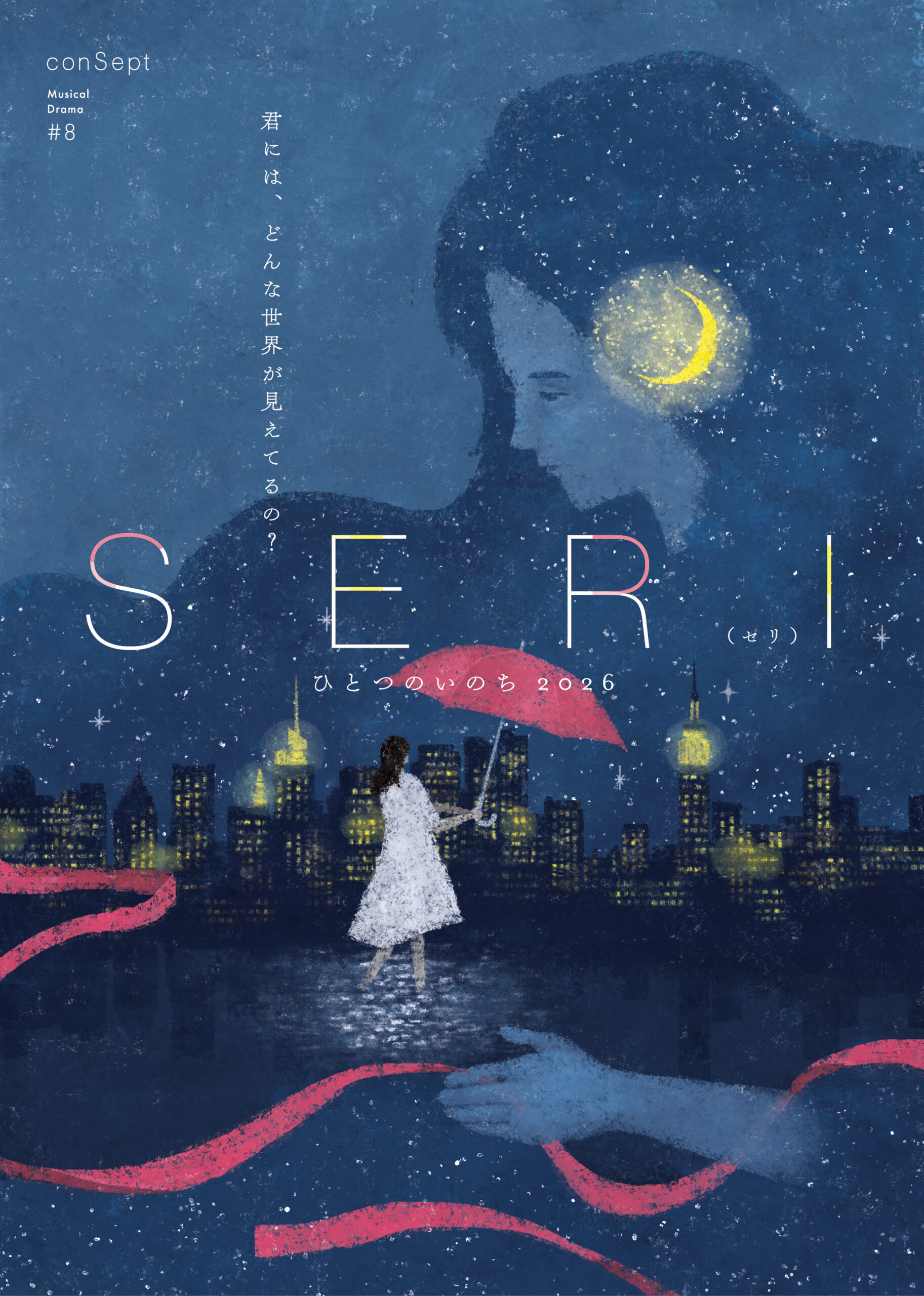
My name is Mikako Kuramoto, and I live in New York.
My oldest daughter, Seri, has bilateral anophthalmia, making her completely blind, along with severe intellectual disability and numerous other disabilities. I was constantly lost in the unprecedented journey of raising her. In 2012, I published my book “The Unfinished Gift,” chronicling those days of struggle. I have since published sequels and an English translation.
Reflecting on my own difficult times when I couldn't ask for help, and as part of my work to amplify the unheard cries for help in society, I have continued my activities with like-minded colleagues at the general incorporated association TruBlue since 2020.
During this journey, the musical stage production “SERI ~ One Life,” based on my book, premiered in Tokyo and Osaka in 2022. Furthermore, a video premiere screening was held in 2023, receiving very high acclaim.
We at TruBlue continue our activities with the goal of widely sharing the message embedded in this musical work and screening it overseas once again. A revival performance in Tokyo has been confirmed for late February 2026.

MOVIE "KOWLOON GENERIC ROMANCE"
https://www.youtube.com/watch?v=czM9mm4r-HE
Reiko Kujii, who works at a real estate agency in the nostalgic city of Kowloon Walled City, finds herself drawn to her senior colleague, Hatsu Kudo. After realizing her feelings, Reiko discovers from a photograph that Hatsu once had a fiancée—one who looked exactly like her. The existence of another Reiko Kujirai made her realize she had no memories of her past. Daily life unfolds in the eerily beautiful streets of Kowloon. Scenes that feel nostalgic despite her lack of memory. And an unstoppable love. As past and present timelines intertwine, love unravels all the secrets—. ©Jun Mayuzuki/Shueisha/Kowloon Generic Romance Production Committee

https://www.youtube.com/shorts/R00kSKbRSG8
↓↓↓Yosuke Kubotsuka
1) 話題の入口:なぜ「肚」なのか
• あなたは「腹を割って話す/腹の底が見えない/腹黒い/腹を切る」など、日本語の中心に“腹”が繰り返し出てくることに注目している。→ 肚
• そこから、「腹=ただの臓器ではなく、人の本音・人格・覚悟・善悪まで背負う象徴では?」という問いが立ち上がっている。
2) 切腹への疑問:なぜ“腸”を切るのか
• 「ここ(例えば首、心臓など)でも死ねるのに、なぜ腸を切ったのか?」という疑問を、映画体験も契機に再検討している。
• 一般的に語られる「長く苦しむことに耐える」だけでは説明し切れない感覚がある。
1) Entry point of the topic: Why “HARA (肚)”
You focus on how expressions involving hara repeatedly appear at the core of the Japanese language:
“hara o watte hanasu” (to speak frankly),
“hara no soko ga mienai” (unreadable intentions),
“haraguroi” (black-hearted),
“hara o kiru” (to cut one’s belly). → 肚From this arises the question:
Is the belly not merely an organ, but a symbol that carries a person’s true feelings, character, resolve, and even good and evil?2) Questioning seppuku: Why cut the intestines
You reconsider the question:
“Death could occur by cutting the neck or the heart—so why cut the intestines?”
This reexamination is prompted in part by a cinematic experience.There is a sense that the commonly given explanation—“enduring prolonged suffering”—does not fully account for it.
3) Your hypothesis: The intestines symbolize the “core of life”
Cutting the intestines is not merely a lethal act, but may represent the act of severing the very root of life—the foundation of existence itself.
This act connects with the Bushidō concepts of resolve and honor, taking on a ritualistic quality of offering up the very center of one’s life.
4) Awareness of linguistic sensibility: You frequently use “hara”
You yourself tend to use expressions involving hara in everyday language.
Because of this, the Japanese sensibility of
“hara = essence,”
“hara = character,”
“hara = depth”
feels deeply real to you.
5) Expansion by association: The affinity between “soil” and “intestines”
From here, your thinking expands further, arriving at an intuition that underground soil environments and intestinal environments are similar.
Both are unseen places where decomposition, circulation, and fermentation occur, forming the foundation that supports the health of the whole.
6) An open continuation: Toward the world of characters and radicals
Finally, your attention begins to shift toward the structure of kanji, such as
“空” (with the hole/roof radical) and
the “moon radical” (月偏 / 肉月).In other words, your inquiry deepens step by step:
language (idioms) → ritual (seppuku) → view of life (intestines) → environment (soil and gut) → structure of written characters.
https://www.youtube.com/watch?v=st2PP7tgmdE&t=1784s
↓↓↓
[An authority explains: The secrets of the gut, even more powerful than the brain]
Why the gut is called the “first brain” /
The relationship between irritable bowel syndrome and stress /
A doctor’s own healthy eating practices
【EXTREME SCIENCE】
↓↓↓
This video features Dr. Shin Fukudo, a leading authority on irritable bowel syndrome (IBS) and brain–gut interaction research.
It provides a logical explanation—based on scientific data and evidence—of the close relationship between the brain and the gut, how stress affects the intestines, and how the gut environment influences the brain and mental health.
Below is a step-by-step summary following the structure of the discussion.
1. Scientific verification of IBS and stress
At the beginning of the video, it is shown that the abdominal pain and digestive discomfort many people suffer from are not “imagined,” but are based on clear physiological mechanisms.
Severity of IBS:
About 10% of the global population—and up to 40% under broader definitions—suffers from some form of gastrointestinal symptoms. Stress-induced abdominal pain was once dismissed as psychological, but it is in fact a serious and real bodily reaction. [00:10]Stress-response experiments:
When stress tasks (such as tracing a star while looking in a mirror) were applied, healthy individuals showed little change, while IBS patients exhibited a significant rise in colonic pressure and intense contractions. [06:04]Synchronization of brain and gut:
Changes in brain waves (decreased alpha waves, increased beta waves) and changes in gut activity were measured simultaneously for the first time in the world, proving that the brain and intestines are tightly linked. [10:40]
2. Mechanisms of brain–gut interaction: Hormones and visceral sensitivity
The specific substances and mechanisms behind stress-induced gut movement are explained.
Stress hormone (CRH):
When the hormone CRH, released by the brain during stress, is administered, the intestines contract violently, causing abdominal pain. In IBS patients, this pressure can reach three times that of blood pressure. [16:35]Visceral hypersensitivity:
Some IBS patients do not improve with medications that suppress intestinal contractions. This is due to “visceral hypersensitivity,” where signals from the gut are perceived excessively by the brain, often accompanied by heightened anxiety. [19:35]Animals show the same response:
When rats are repeatedly given intestinal stimulation, they begin exhibiting anxiety-related behaviors, such as hiding in dark places—suggesting that gut conditions can govern brain-driven emotion and behavior. [21:10]
3. Gut microbiota and brain function: Production of neurotransmitters
The discussion deepens, introducing findings that gut bacteria are directly involved in producing neurotransmitters.
The gut as a factory for brain substances:
Gut bacteria are now known to produce precursors for crucial neurotransmitters such as dopamine and serotonin. [30:15]Connection to mental health:
In patients with depression, certain gut bacteria (such as Coprococcus) are reduced. Constipation often appears as an early symptom of Parkinson’s disease and Lewy body dementia, suggesting that deteriorating gut health may be a risk factor for neurological disorders. [30:52]
4. Gut condition influences "decision making"
Gut health affects not only mood but also higher-level cognitive decision-making.
Flexible judgment (pivot) ability:
In tasks requiring rapid adaptation to changing rules (Wisconsin Card Sorting Test), IBS patients showed delayed activation in specific brain regions (dorsolateral prefrontal cortex), indicating difficulty in switching judgments. [42:27]Gut feeling (hara-ochi):
Intuition and the sense of something “sitting right in the gut” arise when signals from the intestines are properly transmitted to the brain. If the gut is not balanced, appropriate risk-taking and decisions may become difficult. [01:03:48]
5. Practical measures: Sleep and diet
Finally, concrete lifestyle habits for maintaining healthy gut function are presented.
Nighttime “cleaning” movement:
During fasting and sleep, the intestines perform powerful contractions (housekeeping movements) about every 90 minutes to clean themselves. Late-night eating interferes with this process, so early dinners and sufficient sleep are essential. [46:03]Recommended foods:
Fermented foods: natto, etc. [01:11:46]
Brown or partially polished rice: rich in fiber and vitamins, helps prevent rapid blood sugar spikes. [01:12:04]
Soluble dietary fiber: mekabu, mozuku, seaweeds, and legumes. [01:12:43]
Conclusion
This video scientifically reframes ailments often regarded as “mental issues” through the lens of the bidirectional brain–gut network (brain–gut axis).
Improving gut health is not only essential for digestive comfort, but also for mental health, prevention of brain aging and making sound decisions throughout life.

When you get a Task Manager, work really starts moving!
↓↓↓
Open Chat "Life Map"

Is this restaurant in Shibuya delicious?!


Link to Takumi Yamazaki’s
ENGLISH Book “SHIFT”
